


Looking for a play-based San Francisco preschool with a strong parent co-op community?
Tucked where Laurel Heights meets the Inner Richmond, Laurel Hill Nursery School hides behind a modest mid-century schoolhouse—you could stroll past on your way to Trader Joe’s or Clement Street and never guess what’s inside.
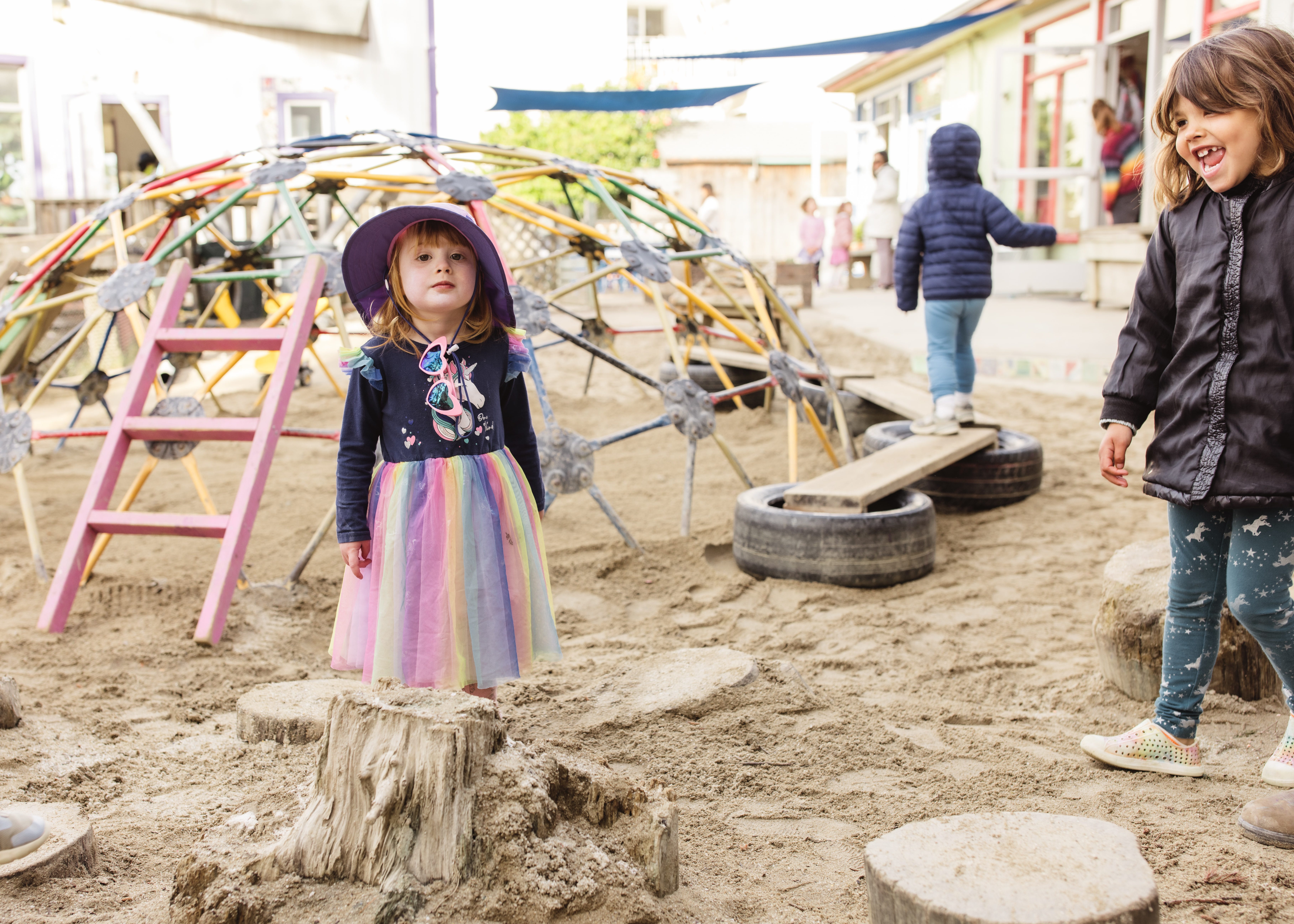
Step through our doors and the city falls away. Bright classrooms open onto more than a quarter acre of possibility: children zoom around the bike deck, sculpt rivers in the giant sand pit, and roam hillside gardens of redwoods and fruit trees—joined by parents and teachers who guide, play, and share in the day’s discoveries. In the distance, fog rolls over Golden Gate Park and wild parrots screech overhead. The space hums with laughter, excitement, and the frequent storm of big feelings that come with growing up.
Since 1947, Laurel Hill has embodied San Francisco’s tradition of progressive, parent-run education. For nearly eighty years, families and teachers have grown together here, proving that play, curiosity, and community can shape a lifetime of learning.
The Power of Play—And Our Five Core Materials
At Laurel Hill, play is the work of childhood—and the foundation of everything we do. Through play, children make sense of the world, build relationships, and develop habits of mind that last a lifetime. Whether building an elaborate train track, mixing mud and water to “cook,” or negotiating whose turn it is on the hammock swing, they explore problem-solving, collaboration, empathy, and self-regulation.
Our curriculum centers on five foundational, open-ended materials that spark deep learning and creativity:
Water – Explore gravity, buoyancy, and flow while mixing colored ice, blowing bubbles, or pumping rivers through the sand.
Sand – A natural medium for building, measuring, and storytelling—from “lava flows” to buried treasure.
Paint – A canvas for creativity where children experiment with color, texture, and self-expression.
Clay – Builds fine-motor skills as little hands shape, roll, and create imaginary worlds.
Blocks – Inspire engineering and collaboration, encouraging planning, teamwork, and problem-solving.
Unlike battery-operated toys, these materials don’t tell children how to play—they invite kids to bring their own ideas and curiosity. The result is active, self-directed, joyful learning.
✨ Join our Waiting List ✨. Take a Tour | How to apply
Parents Grow Here Too
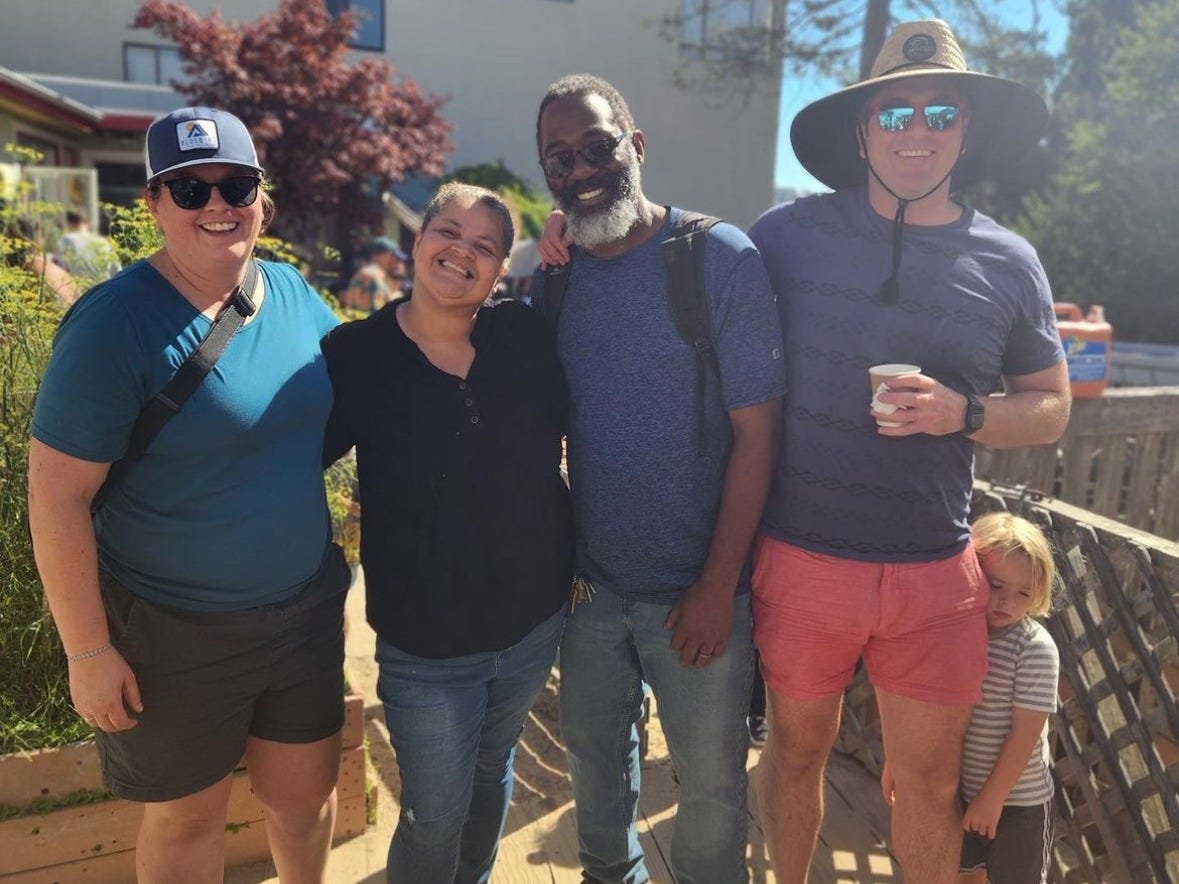
One of the greatest gifts of a Laurel Hill education is how it nurtures parents as well as children. The weekly half-day work shift and co-op responsibilities may take some adjustment, but the rewards are profound. Side by side with teachers, parents witness their children’s discoveries firsthand and grow right along with them—building patience, empathy, and confidence in their own parenting.
Some Skills You’ll Hone as a Parent
Fostering independence – Show the first step (“Here’s how to start…”) and then hang back while your child works it out.
Modeling everyday manners – Let kids see you offer warm greetings and thanks so politeness grows naturally.
Celebrating the process – Point out effort and strategy (“I noticed how carefully you balanced those blocks”) to nurture a growth mindset.
Reframing sharing – Encourage taking turns: children hold onto a toy until they feel finished, while others practice patience.
Keeping cool with spicy words – When swearing or potty talk surfaces, stay calm, explore what they’re trying to express, and guide them toward more constructive language.
A Full Day at Our San Francisco Parent Co-op Preschool
At 9 a.m., Laurel Hill bursts to life. Families are greeted at the gate by Jessica, our office manager; Sabrina, our director; and Justin, our assistant director—a trio who embody the school’s culture of warmth, connection, and care. Children hang their backpacks in cubbies and—depending on their mood—say goodbye with a hug, a high-five, or even a playful “push” to send their grown-up on their way. Read more about drop-offs here.
Our four classrooms and outdoor spaces are intentionally prepared for exploration and self-directed play:
Red Room – A vibrant space for painting, crafting, and exploring artistic expression.
Blue Room – A calming sensory zone with music, swinging, and tumbling for big-body play.
Purple Room – Hands-on discovery with science activities and early learning projects.
Yellow Room – Costumes, a playhouse, and plenty of space for pretend adventures.
Outside, children race trikes across the Bike Deck, climb the Dome, dig in the giant sand pit, pump water, and cook up pretend meals in the Lower Deck play kitchen. The Lower Slope & Garden, reserved for Pre-K, offers raised beds, a hillside slide, and a wild nature zone.
Workday parents join teachers to guide social dynamics and offer gentle support. Children pause on the Purple Deck to share a snack, flip through books, and chat with friends.
Playful calls to transition echo across the campus: “Shoe, Socks, and Clothing Time,” inviting anyone who has shed layers to change into something fresh; “Music and Movement,” as children dash to join songs and rhythm games; “Pre-K Time,” when our oldest children gather for more focused activities that gently prepare them for kindergarten; and finally “Group Meeting Time,” where kids come together to sing songs and reflect as the day transitions.
By late morning, early workday parents (8:45–11:50) and half-day families head out while full-day children settle in for lunch. In the afternoon, a fresh crew of afternoon workday parents (12:45–3:50) carries the co-op spirit forward. Some children nap; others continue their adventures across classrooms, gardens, and decks until the day’s final goodbyes.
It’s common to pick up your child in an outfit completely different from the one you dropped them off in—a happy sign of a day rich with water, paint, sand, clay, and blocks. We keep plenty of extra clothes and shoes on hand because mess is proof of deep learning.
Takeaways for Every Family
Whether your child is a toddler, a kindergartner, or long past preschool age, the lessons of play-based early learning apply at home:
Creativity fuels resilience. Open-ended play nurtures flexible thinking and problem-solving—skills valued far beyond the sandbox.
Connection builds confidence. When adults model empathy and cooperation, children grow into collaborators and community-builders.
Mess is learning. Spilled water, muddy shoes, and paint-splattered clothes signal experiments in action, not chaos to clean up.
Simple At-Home Play Ideas
Bring a bit of Laurel Hill’s play-based learning into your own home by setting up simple invitations to play with the same five core materials—water, sand, paint, clay, and blocks. The key is to set the stage and then step back, letting your child discover, experiment, and shape the play in their own way.
Water : Fill a tub, sink, or large bowl with water and offer cups, funnels, spoons, and a few household objects. Invite your child to see what sinks or floats, make rivers, or invent a “soup.” Ask, “What do you notice? What might happen next?”
Sand: If you have a sandbox or even a bin of clean sand, set out small scoops, cups, and natural treasures like sticks or shells. Watch as your child digs rivers, buries “treasure,” or creates tiny landscapes.
Paint: Lay out smooth stones and a few paints or markers. Offer no instructions—just the materials. Children might decorate the stones, then line them up to tell a story or invent a game.
Clay: Place a lump of clay (or playdough) on the table with simple tools—popsicle sticks, rolling pins, or leaves for texture. Let your child pinch, roll, and sculpt whatever they imagine.
Blocks: Set out a basket of blocks and simply say, “I wonder what you’ll build today.” Whether it becomes a city, a tower, or a racetrack, resist the urge to direct—let their own engineering ideas take shape.
These low-prep setups invite the same kind of open-ended discovery children experience each day at Laurel Hill. Your role is simply to offer the materials and space—then let curiosity take over.
P.S. For more inspiration on raising confident, compassionate kids, we love It’s OK Not to Share and Other Renegade Rules for Raising Competent and Compassionate Kids—a perfect companion to our play-based approach.
Learn More About Laurel Hill
Cost & Commitment – Details on tuition, parent-participation expectations, and what makes our co-op model unique.
How to Apply – Step-by-step guide to our application process.