

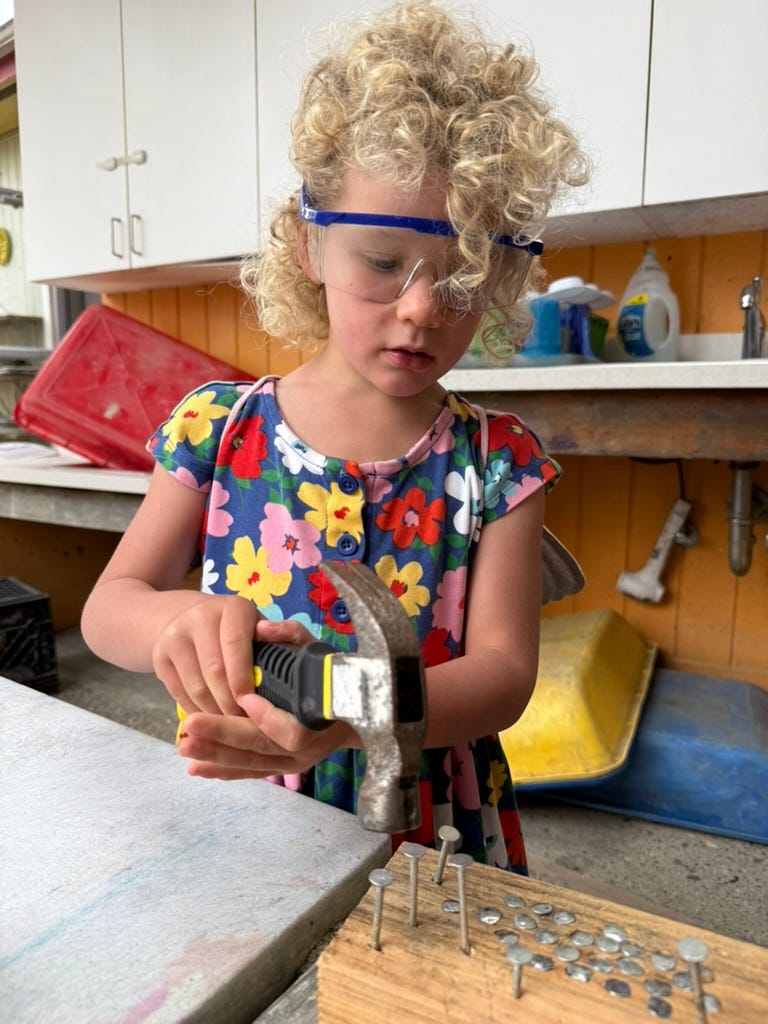
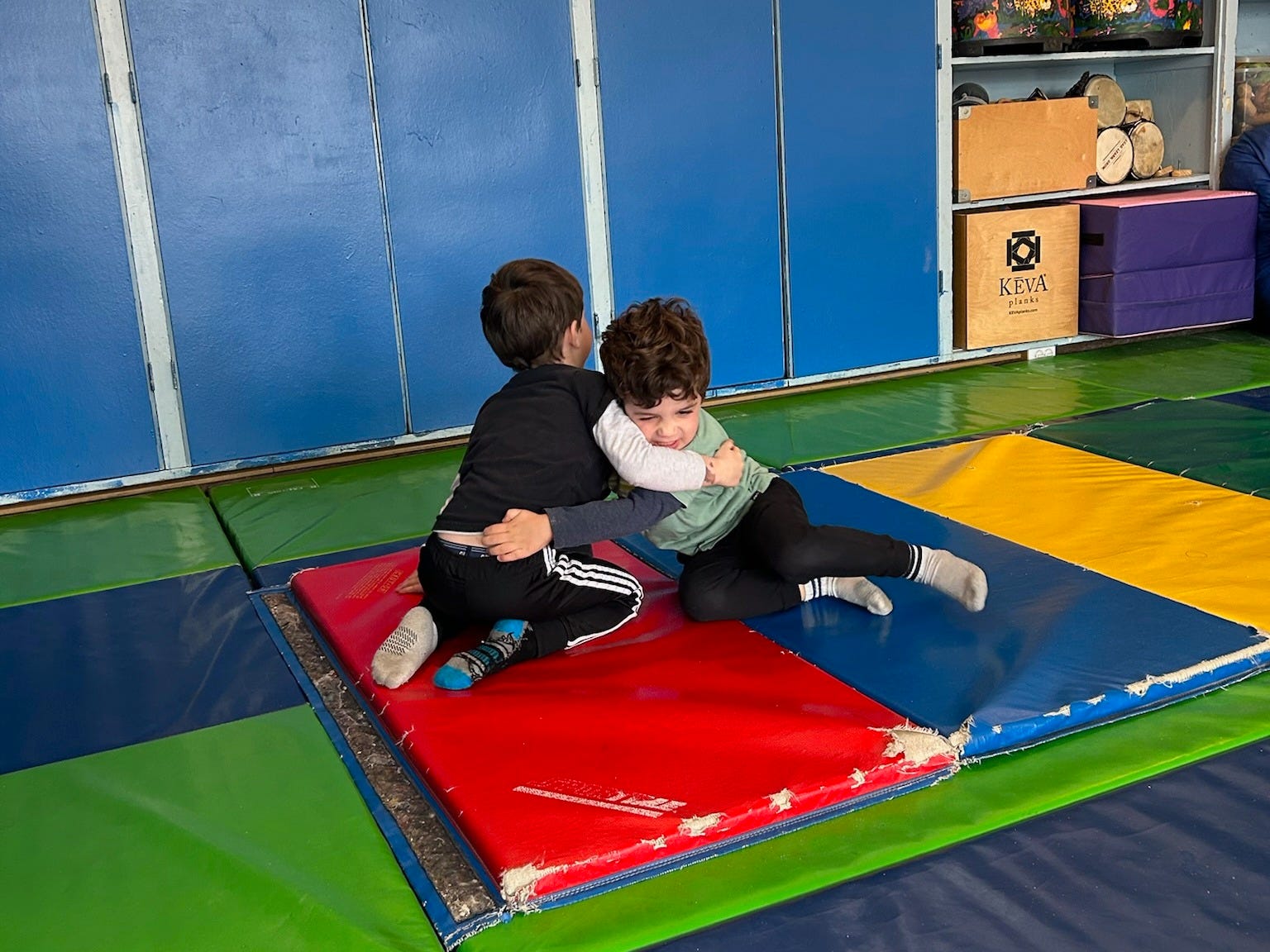
On any given day at Laurel Hill Nursery School, you might see a child carefully squeezing hot glue onto a cardboard invention, another pounding real nails into a piece of wood, and a small group climbing a structure they built. And if you pass by Blue Room at the right moment, you might also see children wrestling on some well worn mats — rolling, laughing, testing their strength, negotiating where the line is between “fun” and “too much.”
To an outside observer, it can look chaotic. Even risky.
To us, it looks like childhood doing its most important work.
Over the past few decades, childhood has become quieter, softer, and far more controlled. Playgrounds have shrunk. Tools have turned into toys. Conflict is quickly smoothed over. Falls are prevented whenever possible. All of this comes from a good place—a desire to keep children safe. But in the process, something essential has been lost: the chance to learn how to handle the world as it actually is.
Children don’t develop good judgment by avoiding challenges. They develop it by meeting them.
That’s why Laurel Hill embraces what educators call “risky play.” Not danger for its own sake, but meaningful challenge: climbing high enough to feel your stomach flutter, learning to hold a hammer steady, working with something hot or sharp under careful guidance, navigating big emotions in the middle of a game that suddenly gets intense. These experiences build coordination, confidence, self-control, emotional resilience, and social understanding in ways no worksheet ever could.
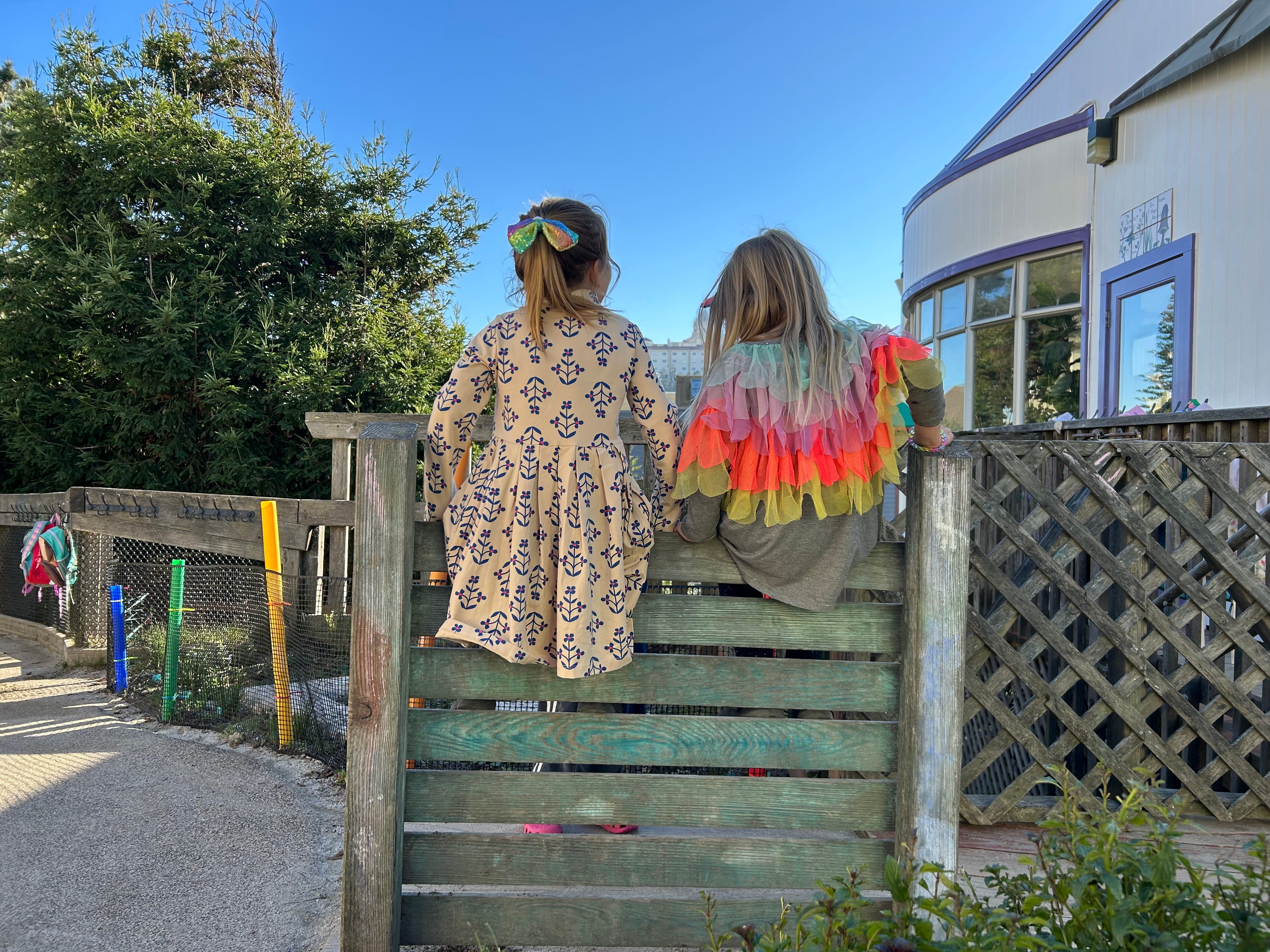
We supervise closely. We step in when something crosses a line. We teach children how to use tools safely, how to read each other’s cues, how to stop and reset when play becomes overwhelming. But we don’t try to remove all risk from the equation, because risk itself is a teacher.
The goal is not to make environments risk-free, but to make children capable. When adults remove every challenge, children don’t become safer. They become less prepared.
This way of thinking also helps explain something families have noticed lately: a rise in wrestling and roughhousing in Blue Room.
Rough-and-tumble play is one of the oldest forms of learning there is. Across cultures and even across species, young mammals wrestle. They tumble, chase, pin, escape, and try again. Through this, children learn how strong they are, how strong others are, how to control their bodies, how to read facial expressions, how to notice when someone is having fun—and when they are not.
Research consistently shows that playful roughhousing does not make children more aggressive. In fact, it often supports emotional regulation and empathy. When guided well, it teaches children restraint, consent, cooperation, and repair. At Laurel Hill, wrestling is never about anger or settling disputes. It is about play. Children are taught to stop when the bell rings, to check in when a friend looks uncertain, and to keep everyone safe enough that the game can continue.
In this way, roughhousing is simply risky play in its most human form.
When children wrestle, they are practicing the same skills they use on climbing structures or with real tools, just on an emotional level. They are asking: Can I trust you? Will you listen to me? What happens if I go too far? Can we fix things if someone gets hurt or scared? These are not small questions. They are the foundation of healthy relationships.
For many parents, risky play triggers the same reflex every time: step in, smooth it out, make it safe.
That instinct makes sense. But when we pause, we often see the tradeoff—fewer scraped knees, yes, but also fewer chances for children to discover their own strength, resilience, and capacity to work things out with others.
That is what risky play offers.
So whether it’s hot glue, hammers, tall structures, or wrestling on the mats, Laurel Hill holds to the same principle:
Safety first. Not safety only.
Because childhood isn’t about avoiding every fall. It’s about learning how to get back up—with skill, courage, and care for the people around you.