

At Laurel Hill Nursery School, Parent Participation is the heartbeat of our cooperative preschool model and the foundation of how children learn, grow, and thrive here.
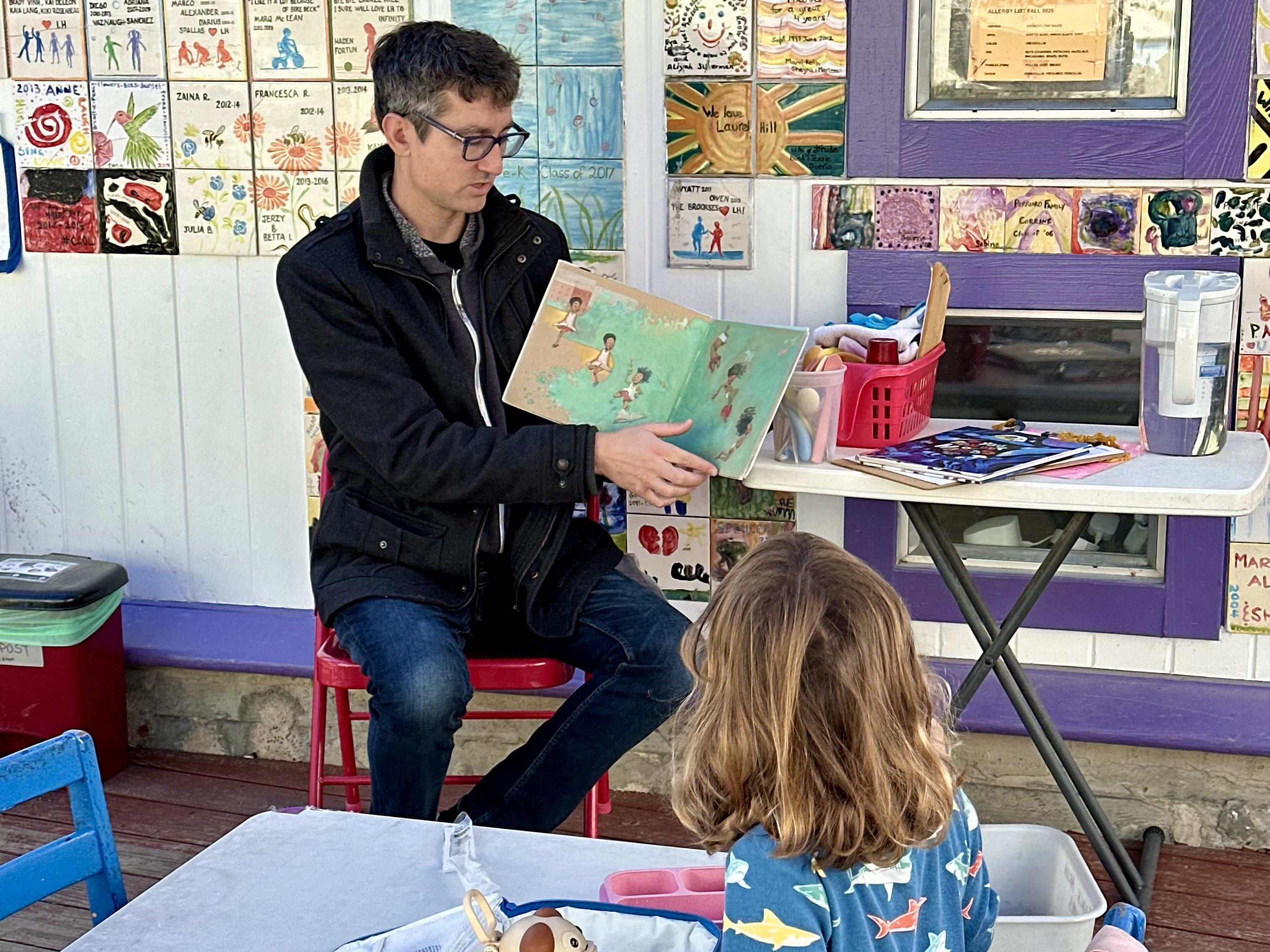
Families who visit us often ask: What does it really mean to be part of a co-op preschool? For many, the idea of joining teachers in the classroom, taking on committee roles, and learning alongside their child feels both exciting and a little mysterious.
The truth is, parent participation is what makes Laurel Hill—and cooperative preschools everywhere—so special. It keeps families connected to their children’s early experiences, builds deep friendships, and creates a joyful, hands-on learning environment that feels more like an extended family than an institution.
Here we hope to explains what parent participation looks like day to day, and why so many Laurel Hill alumni say this model shaped their early parenting years in lasting ways.
What Is Parent Participation in a Cooperative Preschool?
Parent participation is the daily engine of Laurel Hill. Every family at our co-op takes part in a weekly three-hour workday, joining teachers and children in creating the day’s rhythm.
A workday at Laurel Hill begins with parents arriving a few minutes early and gathering for a brief meeting led by our Assistant Director, who shares updates and guidance for the day. After the meeting, each parent is assigned a rotating workday card—red room, bike deck, lower slope, dome or another classroom or yard role. These assignments rotate every three weeks so over time, every family experiences each area of the school.
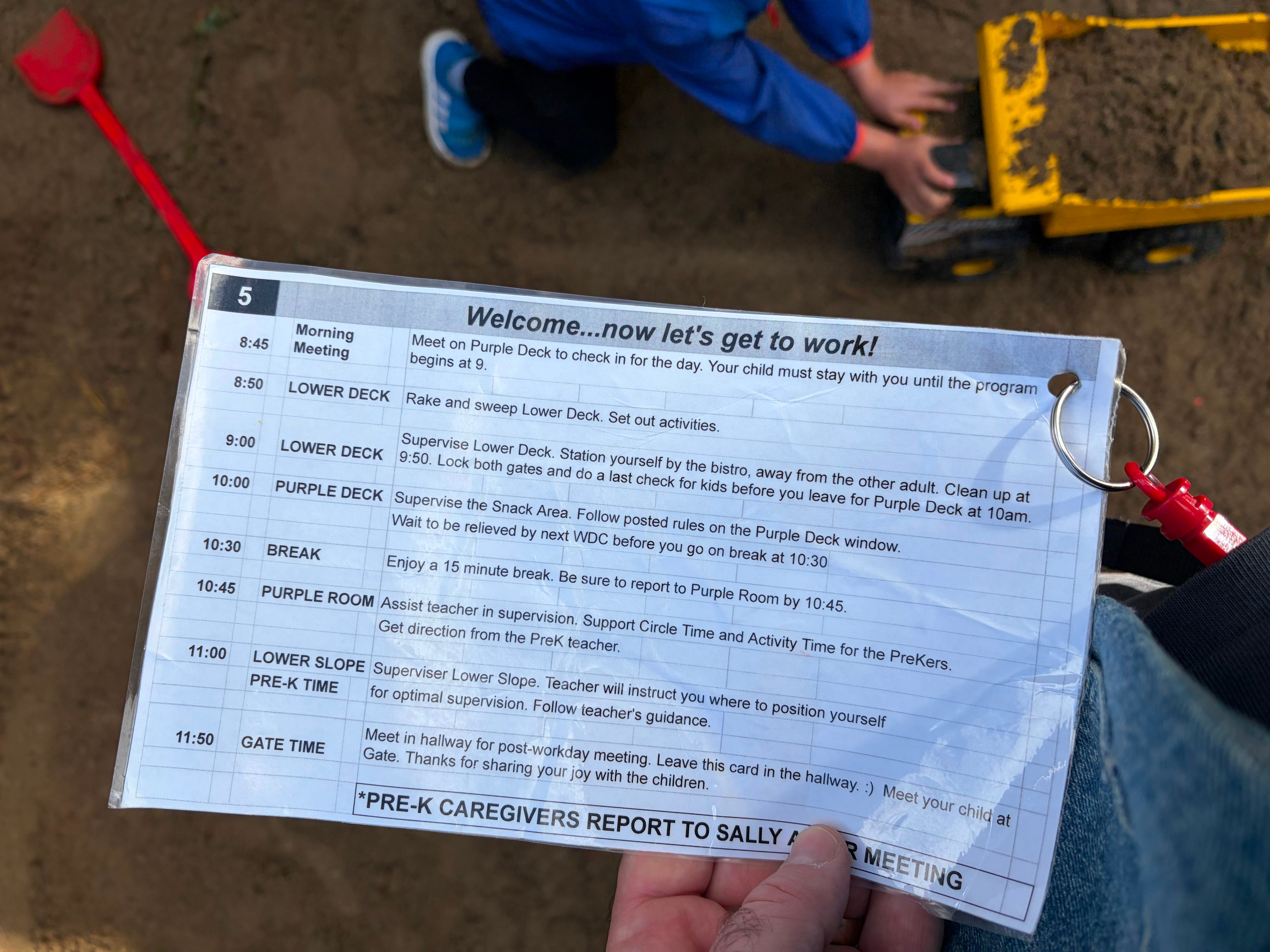
The shift is spent supporting play, prepping materials, helping with transitions, and being an encouraging presence wherever children need you. Workdays end with cleanup—often leaving you sandy, paint-smudged, and full of small moments most parents never get to see.
In addition to workdays, co-op participation includes five evening parent education meetings each year and a committee and volunteer roles that helps maintain the school community—from garden care to organizing our beloved annual Auction. Monthly evening business meetings keep all families informed and involved.
For new families participation can be an adjustment. The first few weeks may feel awkward or overwhelming. But you’re supported every step of the way, and what starts as a challenge often becomes the part families cherish most.
To keep the co-op accessible, single-caregiver households have adjusted requirements and plenty of help from the community.
✨ Join our Waiting List Now ✨. Take a Tour | How to apply
Is a Co-Op Preschool Right for Your Family?
While co-op preschool offers so much, it won’t be the right fit for every family—and that’s completely understandable.
A weekly half-day on campus is a meaningful commitment. Some families feel energized by the idea; others wonder how to make it work with full-time jobs, childcare, or busy schedules. Both reactions are completely normal.
Families find creative ways to meet the workday requirement, including:
Tag-teaming the workday
Some families alternate weeks so each caregiver gets a turn in the classroom (and a break the next week).Stretching parental leave across the year
Instead of taking it all at once, some parents spread out their time so they can cover workdays consistently.Calling in the grandparents
Grandparents love a reason to be on campus—many cover one workday a month, creating special memories.Swapping and trading workdays
Families often trade days when someone has a busy week, a deadline, or a sick kid.Creative scheduling
Many families shift early meetings, adjust lunch breaks, or coordinate with employers who support community involvement.
After one full year at Laurel Hill, families who need more flexibility may request to pay out their workdays.
Participation asks something of families—but it gives back something extraordinary: time with your child during a fleeting stage of life, a deeper connection to how they learn and play, and a school community that truly feels like family.
Why Parent Participation Matters in a Co-Op Preschool
Parent participation transforms early education into something deeper—for children, for parents, and for the broader community.
When children see familiar adults in their school day, they feel secure and supported. They watch kindness, patience, communication, and problem-solving modeled in real time—values that shape how they interact with others.
With more adults present, children feel confident exploring, trying new things, and navigating relationships with guidance and encouragement.
The co-op model creates meaningful friendships. Working side-by-side in the classroom, during clean-ups, or while preparing for the Auction builds connections that often last far beyond preschool.
But the biggest gift is perspective: you get a rare window into your child’s world.
You see:
who their friends are
how they communicate
what excites them
how they handle challenges
their humor, kindness, and independence
Parents often share:
“Yes, the half-day can be a juggle. But seeing my child’s world up close is something I will cherish forever. These moments are brief—you don’t get them back.”
What Do Parents Learn Through the Co-Op Model?
Parents often discover as much about themselves as they do about their children. Common reflections include:
A deeper understanding of child development
More patience and empathy
Confidence navigating conflict and big feelings
Joy in slowing down and observing
A renewed appreciation for the role of play
A sense of belonging in a supportive community
Tips for New Co-Op Families
Before You Start
Before the year begins, take time to talk openly as a family about scheduling, support, and what participation will look like. Explore committee roles that align with your strengths, and connect early with your class leads so you feel supported from the start. You’ll also be paired with a veteran family who can answer questions, share tips, and help you feel at home. In addition, a dedicated member of the board is available to you personally—someone you can turn to any time for guidance or clarification. We want this experience to feel welcoming, clear, and accessible for every family.
Your First Month
In the first few weeks, expect to feel new—everyone does. Let the teachers guide you as you learn the rhythm of the classroom. Introduce yourself to other families, too; they’ll quickly become your village and an essential part of the co-op experience. Your veteran family will also check in regularly to help you navigate workdays, communication, and all the little details that make the year run smoothly.
Bring Your Strengths
Whether it’s gardening, organizing, storytelling, building, cooking, crafting, or simply observing, everything you naturally love to do contributes meaningfully to the school community. Your unique strengths are not just welcome—they’re needed.
In the End…
Parent participation isn’t always simple. It takes planning, flexibility, and the willingness to show up. But it offers something rare and irreplaceable:
a real place in your child’s early world.
You see who their friends are.
You witness their confidence grow.
You hear their stories firsthand.
You become part of a community that raises children together.
You help create a school where every child thrives.
At Laurel Hill, parent participation isn’t just part of the co-op model—
it’s part of the magic of this place.
Learn More About Laurel Hill
We already have a waiting list for next year—a sign of how many San Francisco families want to be part of our cooperative preschool community. If you’re looking for a parent-participation preschool in the Inner Richmond / Laurel Heights area, we’d love to welcome your family too.
Cost & Commitment – Learn how our San Francisco co-op preschool model works, what parent participation at Laurel Hill Nursery School entails, and why families across the Richmond District, Laurel Heights, and the broader city find it meaningful and rewarding.
How to Apply – Explore our simple, step-by-step application process for Laurel Hill Nursery School, and learn how to join our interest list and waiting list for upcoming school years.